
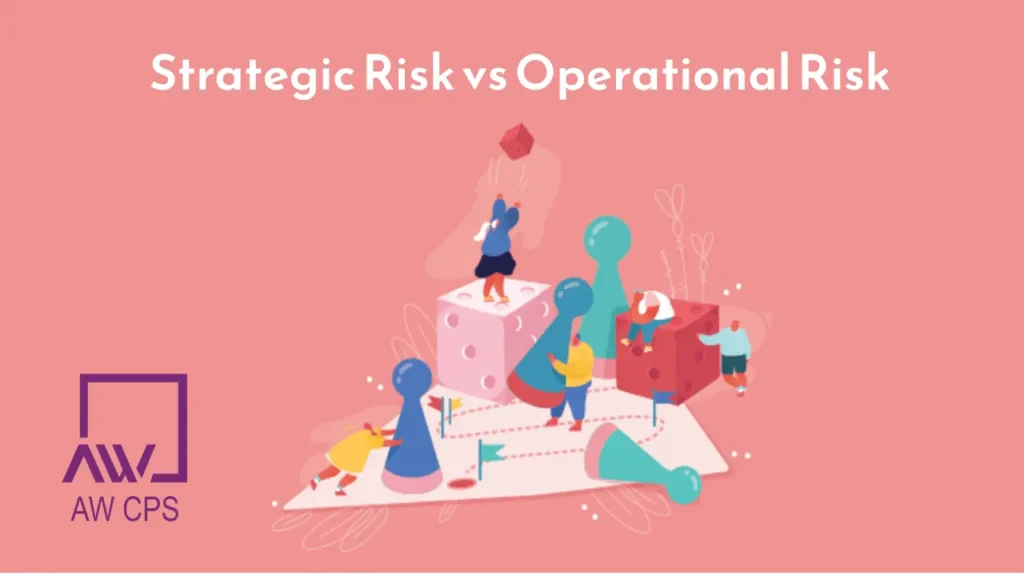
Risk is an unavoidable part of running a business, but not all risks are the same. Understanding the difference between strategic risk and operational risk is essential for effective decision-making, long-term planning, and financial stability.
This article explains strategic risk vs operational risk, outlines the main types of corporate risk, and shows how professional support from AW CPS helps businesses manage risk proactively.
What Is Corporate Risk?

Corporate risk refers to any uncertainty that may negatively impact a company’s ability to achieve its objectives. These risks can affect finances, operations, legal compliance, reputation, and growth potential.
Recognizing different types of corporate risk allows organizations to prioritize threats and allocate resources effectively.
Learn Business Risk Assessment Guide
Understanding Strategic Risk
Strategic risk arises from decisions that affect the long-term direction of a business. These risks are often linked to leadership choices, market positioning, and business models.
Common Sources of Strategic Risk
-
Entering the wrong market
-
Poor expansion or investment decisions
-
Changes in consumer behavior
-
Increased competition
-
Failure to adapt to industry trends
Strategic risks typically unfold over time and can significantly impact a company’s future performance.
Understanding Operational Risk
Operational risk comes from failures in day-to-day business activities. These risks are linked to internal processes, systems, people, and operational execution.
Common Sources of Operational Risk
-
Process inefficiencies
-
Human errors
-
Technology failures
-
Supply chain disruptions
-
Compliance breakdowns
Operational risks tend to be immediate and can disrupt business continuity.

Strategic Risk vs Operational Risk: Key Differences
Understanding strategic risk vs operational risk helps organizations develop targeted risk management strategies.
| Aspect | Strategic Risk | Operational Risk |
|---|---|---|
| Focus | Long-term goals | Daily operations |
| Source | Business decisions | Internal processes |
| Time Horizon | Medium to long term | Short term |
| Impact | Growth and direction | Efficiency and continuity |
| Control | Leadership-driven | Process-driven |
This table clearly highlights the difference between strategic and operational risk.
Types of Corporate Risk Businesses Must Monitor

Beyond strategic and operational risk, companies should also assess other types of corporate risk, including:
Financial Risk
Cash flow issues, credit exposure, debt management, and market volatility.
Legal and Compliance Risk
Regulatory violations, contractual disputes, and legal exposure.
Reputational Risk
Brand damage caused by poor service, public incidents, or compliance failures.
Credit Risk
Non-payment by customers or counterparties.
A holistic risk approach integrates all these risk categories.
Why Distinguishing Between Strategic and Operational Risk Matters
Failing to understand the difference between strategic and operational risk can lead to:
-
Misaligned risk mitigation strategies
-
Inefficient resource allocation
-
Poor decision-making
-
Increased financial exposure
Addressing each risk type with the right tools improves resilience and performance.
Learn ethical debt collection
How AW CPS Helps Manage Corporate Risk
AW CPS provides professional risk management and financial advisory services that help businesses control both strategic and operational risks.
How AW CPS Supports Your Business:
-
Identification and classification of corporate risks
-
Strategic risk assessment and scenario planning
-
Operational risk analysis and process improvement
-
Financial and credit risk mitigation
-
Ongoing monitoring and advisory support
AW CPS ensures that businesses address the right risks at the right level.
Benefits of Working with AW CPS
Partnering with AW CPS offers:
-
Clear understanding of strategic risk vs operational risk
-
Improved financial stability
-
Stronger decision-making frameworks
-
Reduced operational disruptions
-
Long-term business sustainability
AW CPS combines financial expertise with practical risk solutions.
Learn more about Finance : credit risk vs market risk
FAQs
What is the difference between strategic risk and operational risk?
Strategic risk relates to long-term business decisions that affect direction, growth, and competitiveness, while operational risk comes from failures in daily processes, systems, or people that disrupt normal operations.
What are examples of strategic risk?
Examples of strategic risk include entering the wrong market, poor expansion decisions, failure to adapt to industry changes, increased competition, and incorrect business model choices.
What are examples of operational risk?
Operational risk examples include system outages, human errors, supply chain disruptions, process inefficiencies, technology failures, and compliance breakdowns.
Why is it important to distinguish between strategic and operational risk?
Understanding the difference helps businesses apply the right mitigation strategies, allocate resources efficiently, improve decision-making, and reduce financial and operational exposure.
Which type of risk has a greater long-term impact?
Strategic risk typically has a greater long-term impact because it affects the overall direction and sustainability of the business. Operational risk usually has immediate but shorter-term effects.
How does strategic risk affect business growth?
Strategic risk influences growth by shaping market positioning, investment decisions, and competitive advantage. Poor strategic choices can limit expansion or lead to long-term financial losses.
How can businesses reduce operational risk?
Operational risk can be reduced through process optimization, internal controls, staff training, technology upgrades, compliance monitoring, and regular risk assessments.
What other types of corporate risk should businesses monitor?
In addition to strategic and operational risk, businesses should monitor financial risk, legal and compliance risk, reputational risk, and credit risk.
Understanding strategic risk vs operational risk is a critical step toward effective corporate risk management. While strategic risks shape the future of a business, operational risks affect daily performance — and both require targeted solutions.
By identifying the types of corporate risk and applying the right strategies, businesses can minimize uncertainty and strengthen resilience.
With expert support from AW CPS, managing the difference between strategic and operational risk becomes a structured, proactive process — not a reactive challenge.
Smart businesses manage risk before it manages them.
Follow us on Linkedin